
Disclaimer: None of our reviews are sponsored. We earn a commission when you purchase items through our links.
Heavy duty tools require a heavy duty tool bag – fact!
Buying the wrong one will result in frustration and wasted money – as you’ll just need to buy another.
But with so many poor quality tool bags on the market, which ones should you consider?
Well, we have a round up of the best tool bags on sale today – from budget to high value, we have a bag for you.
On this page:
The Best Tool Bag with Reviews 2024
Here's a list of the best tool bags we found on the market:
2. Dewalt DG5553 Large Tool Bag with Shoulder Strap

- PLENTY OF POCKETS: This heavy duty tool bag has 28 exterior pockets, including 3 flap-covered pockets, plus one drawstring pocket to keep small parts from spilling out.
- DURABLE TOOL BAG: Heavy-duty poly and ballistic poly fabric construction on tool bag includes base pads to protect bottom from water and debris.
- COMFORTABLE: Adjustable, non-slip padded shoulder strap make this toool bag perfect for any job.
- EASILY ACCESS YOUR TOOLS: This tool bag features a pop-open design that allows for easy access and visibility to tools and parts.
- EASY TO OPEN TOOL BAG: This tool bag features a double-pull, heavy-duty zipper.
3. Milwaukee Heavy Duty Canvas Tool Bag

- REINFORCED HANDLES: The side handles are attached to the bag with metal fasteners, letting you lug this bag around the jobsite when it’s packed full of tools
- REINFORCED BOTTOM: Keep this stored on the shop room floor or leave it on the ground on the job. The reinforced bottom of this bag will keep your precious cargo sealed from water and dust
- SHOULDER STRAP: You can keep this slung on your shoulders for maximum ease of portability. The strap is removable, too, so you can set it aside if you’re in an area where it’s likely to get...
- ORGANIZATION: 6 interior pockets keep your tools separated from each other, reducing bumping and jostling while the bag is in transit
- HEAVY-DUTY ZIPPERS: The zipper system is extra-long, letting you pack this bag tight and still able to close it with the help of the robustly constructed metal zippers
4. DEWALT DG5543 Canvas Tool Bag
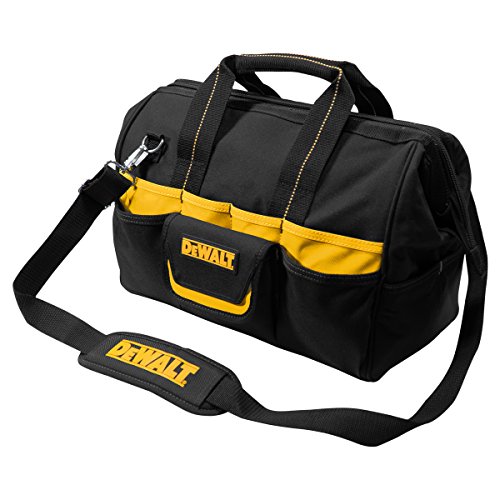
- EASY TOOL ACCESS: This tool bag features a pop-open design and large interior compartment to allow for easy access to tools and parts.
- DURABLE TOOL BAG: This tool bag is heavy-duty poly fabric construction to stand up to any job.
- 33 POCKET TOOL BAG: With 33 pockets in this heavy duty tool bag, this tool bag allows for hundreds of organization options, and includes one flap-covered pocket with hook & loop closure.
- BASE PROTECTION: Durable tool bag features abrasion resistant rubber feet.
- COMFORTABLE TO CARRY: This tool bag is comfortable to carry with an adjustable shoulder strap.
5. WORKPRO Tool Bag with Water Proof Base

- Premium Materials & Construction - This tool bag is made from 600D polyester fabric which provides unmatched durability and reliability. The double fabric with fine stitching of the entire tool body...
- Multi-Pockets & Large Interior Space - Our tool bag boasts 8 sturdy pockets inside, 13 exterior pockets and 8 belts for versatile storage of wrenches, pliers, screwdrivers and accessories. It will...
- Wide Open Mouth & Double-Pull Zipper - This tool bag features wide open mouth with an internal metal frame and top double-pull zipper for easy organization and access. Just pull the zipper to open...
- Abrasion-Resistant & Water-Proof Base - The hard water-proof molded base keeps the bag clean and dry, protects your tools in the bag from hard falls. No need to worry about your tools getting rust and...
- Ideal for Daily Use - Our tool bag comes with the extra padded handle and adjustable shoulder strap which add extra comfort when carrying of heavy loads and allow for safe and secure transit. It's...
6. Klein Tools Deluxe Canvas Tool Bag with Should Strap

- Tool bag has 17 interior pockets for organization
- Tool tote's detachable shoulder strap can be adjusted for a perfect fit
- Made of heavy-duty natural canvas
- Moisture-resistant vinyl bottom with non-scratch studs on the base to protect against wear
- Steel frame mouth with hinge for rugged use
Buying the Right Tool Bag for the Job
If you’re looking for the best tool bag, there are a lot of things to think about before deciding which is the best one for you. Here are some things to consider.
Material
The material is one of the most important things because it determines how durable the tool bag is. There are a few options available. These bags are usually made from nylon, canvas, or poly fabric material. The more durable the fabric, the longer the bag will last. Remember, these tool bags will be carrying around quite a bit of weight so you have to be sure it’s going to be able to handle the weight of the tools you need.
Another thing to think about when it comes to fabric is whether or not the bag is waterproof. A waterproof bag with a reinforced bottom for extra protection will keep your tools safe from rain, puddles, or even if you have to put them down on a layer of fresh snow. A lot of these bags claim to be water resistant which, honestly, is good enough for most applications. Waterproof is more protection from submersion than from rain or splashes of water. Unless you’re a plumber, you probably can get by with a water-resistant bag.
Zippers and Stitching
These are important for durability, too. Look for a sturdy, heavy-duty zipper that will stay closed and won’t get snagged or broken. As for stitching, make sure it’s durable and reinforced, at least around the handles. If you carry a lot of tools, it’s going to put a lot of stress on the seams. Make sure they can handle it.
Bottom Feet
One way to extend the life of your tool bag is with bottom feet to keep the bag raised off the ground when you put it down. Bottom feet prevent the bag from getting abrasions which can weaken the fabric. You definitely don’t want weak fabric on the bottom of your tool bag or, eventually, your tools will end up all over the ground.
Straps
There are a few different options when it comes to straps. The most common is a simple top handle. They’re made of strong material and typically have really strong stitching to make sure they have enough support to hold the weight of the tools.
Most bags also come with an optional shoulder strap that clips on. This is a more convenient way to carry your tool bag, especially if you want your hands free for other things.
Another great choice is a backpack style bag. This is a great choice if you have a lot of tools that will be quite heavy when you pack them up because it helps evenly distribute the weight over your shoulders and back which make it easier to carry.
Pockets
One of the most important things to consider is how many pockets you need and what kind. The products we chose range from having 80 to 7 pockets. That’s a huge difference. If you have a lot of small tools that need organizing, like multiple sizes of wrenches, pliers, and screwdrivers, the more pockets you have, the better. More pockets give you more options for how to organize and it’s more likely there will be a pocket that will perfectly fit every tool.
If you need a lot of room for larger tools like cordless drills, large meters, or even long screwdrivers and levels, make sure you get a bag that has a large main inside pocket. Bags with a lot of pockets don’t tend to have a lot of room for large tools because all the available space has been used. If you don’t need 80 pockets, you will probably be better off with a bag that has fewer pockets and more open space.
Opening
Some of these tool bags have simple zip closures. You open them and reach between the two sides of the bag to get whatever tool you need. This can be a little inconvenient if you have a lot of tool because the opening isn’t quite large enough for you to see into. You’re effectively feeling around in the dark until you find the tool you’re looking for.
There are other options. One is an opening that unzips completely, essentially opening up the entire side of the bag so you can look in and see everything at once. A lot of backpack style bags are designed like this and some of the taller top carry bags.
Another option is a pop-open frame. There’s usually an interior hinged frame around the opening so that when you pull it open, it stays that way. These bags are usually more flat and wide than they are tall so you can look right inside and see everything without having to blindly root around.
Hooks, Clips, and D-Rings
These are a nice feature if you have things you like to store by hanging. You can easily attach a measuring tape, flashlight, or any other small item right to the front of the bag so it’s always within easy reach.
Different Bags for Different Trades?
A great tool bag is essential for anyone who has a lot of tools and takes them out of the workshop on a regular basis. Now, you might be wondering if your trade affects the kind of bag you should get. What we mean is, does a plumber need a different bag than an electrician?
The first thing to consider when answering this question is what tools each needs to be prepared to hand a typical job. A plumber needs a lot of tools: a spirit level, measuring tape, wrenches, pliers, pipe cutters, a drill, screwdrivers, saws, a pressure gauge, and usually some kind of paper towel or blue roll since water is obviously a side effect of the job. As for an electrician, they need some essentials, too: wire cutters, cable cutters, variously sized pliers, wire strippers, screwdrivers, wrenches, torpedo level, hammer, and a multimeter, just to name a few.
A good bag for an electrician has a lot of pouches for organizing the smaller hand tools. They use a variety of differently sized pliers, wire cutters, and strippers so it helps keep them all organized so the right size is easy to find. Another thing to look for is holes or some other feature that allows you to hang the bag. You never know when a job will require climbing onto a roof or up a telephone pole and being able to hang a tool bag keeps everything right within reach.
Plumbers tend to have some larger equipment and not as wide a variety of pliers and wrenches as an electrician. It still pays to have a bag that allows a lot of organization but since they’re probably not going to have multiple sizes of multiple tools, a plumber can probably get by with fewer pockets than an electrician. One thing a plumber does need to worry about, though, is water. A water-resistant back with a reinforced, watertight bottom is essential for a plumber since the chance of the bag being exposed to water is pretty high.
Organization and Convenience
The right tool bag can make you more organized so you’ll never waste another minute hunting down the tool you need. There are bags that are perfect for plumbers or electricians as well as those that will work for just about any trade. Take a look at our top picks and choose the one that works best for you.


Comments